
The Practical Need for AI Tools for Small Business Owners
Operating a small business requires constant effort and resourcefulness. Unlike large corporations with dedicated departments and substantial budgets, small business owners often manage multiple roles—from finance and marketing to customer service—all while keeping costs down. The pressure to compete effectively in a busy market is high. For this reason, adopting technologies that multiply effort and save time is no longer a luxury, but a necessity. This is the context in which AI tools for small business owners become essential assets.
Addressing Limited Resources and Time Constraints
The primary constraint for most small businesses is not a lack of ideas, but a lack of time and staff. Hiring a full team for every function is costly and often impractical. AI tools for small business owners offer a sensible solution by automating routine, high-volume, and repetitive tasks.
Consider administrative work, which consumes a significant portion of an owner’s week. By assigning tasks like generating initial content drafts, sorting emails, or scheduling appointments to AI systems, the owner’s time is freed up. This allows the core human team to focus on activities that directly generate income and require complex judgment, such as building relationships, strategic planning, and refining unique products or services. Using AI is a way to gain the output of an extra employee without the associated cost, making efficiency gains immediately measurable.
Defining Accessible AI for Non-Technical Users
Many small business owners are hesitant to adopt AI because they anticipate technical complexity or high implementation costs. However, the current landscape of AI tools for small business owners is dominated by user-friendly, accessible platforms.
These tools are typically cloud-based, meaning they run entirely through a web browser or a simple app and require no complex technical installation or deep coding knowledge. They usually operate on a subscription model, often starting with a free tier or a low monthly fee, which fits easily into a tight budget. Accessibility is built into the design, featuring intuitive interfaces, simple button layouts, and clear instructions. A successful AI solution for a small business is one that an employee can begin using effectively within minutes, not weeks.
Top AI Tools for Small Business Owners in Customer Service and Sales
Customer interaction is the lifeblood of any small business, yet providing 24/7 service can be taxing. AI offers practical solutions to manage this burden.
Automating Communication with AI Chatbots
For small businesses, slow response times can result in lost customers. AI-powered chatbots, like those offered by platforms such as Tidio or Intercom, address this directly. These tools are simple to set up and can be trained on a business’s existing FAQ, pricing structure, and service details.
These AI tools for small business owners handle the initial, most common customer inquiries, such as store hours, return policies, or shipping status, instantly and consistently. By fielding these questions, the chatbot ensures that a human agent only steps in for complex or urgent issues. This provides customers with continuous, instant support while allowing the limited human staff to focus on high-value problem-solving. It is a cost-effective way to extend customer service hours without increasing payroll.
Using AI for Enhanced CRM and Lead Management
Customer Relationship Management (CRM) is fundamental to sales, and modern platforms integrate AI to make the process smarter. Tools like HubSpot’s free CRM or Zoho CRM utilize AI to automatically score incoming leads based on their activity and engagement.
For AI tools for small business owners, this capability is vital. It eliminates the guesswork of prioritizing contacts, directing the sales team to focus their time on the leads most likely to convert. Furthermore, AI assists in drafting personalized follow-up emails based on a customer’s recent interaction history, ensuring communication is relevant and timely. This level of personalization helps a small business compete with the resources of larger companies.
AI Tools for Small Business Owners in Scheduling and Booking
Lost appointments or double-bookings cost small businesses money and damage reputation. AI scheduling assistants are designed to prevent this.
Tools like Calendly or Acuity Scheduling use algorithms to automatically find the optimal time for a meeting or service based on multiple participants’ calendars and preferred buffer times. These AI tools for small business owners reduce the time spent coordinating emails and scheduling calls, freeing staff for other tasks. In service-based industries, they can even integrate with payment systems and send automated, AI-optimized reminders to clients, significantly reducing costly no-shows.
AI Tools for Small Business Owners in Marketing and Content
Effective marketing requires a steady flow of high-quality content, which is often difficult for a lean team to maintain. AI has become a powerful content assistant.
Creating Efficient Content with AI Writing Assistants
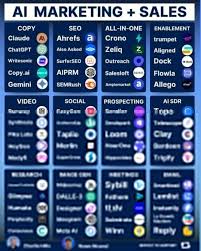
Generating fresh, brand-aligned content can be time-consuming. AI writing assistants such as Jasper or Copy.ai offer a practical solution. These tools can quickly produce first drafts of various marketing assets, including social media captions, short blog intros, email subject lines, and product descriptions.
These AI tools for small business owners save the business owner the cost of hiring an external copywriter for every small piece of content. The owner maintains control by providing the specific topic and tone, then reviews and refines the AI-generated text. The system acts as a high-speed drafting partner, allowing the human writer to focus on adding the unique insights and voice that connect with the audience.
Personalizing Campaigns with AI Email Marketing
Bulk email marketing rarely converts well; personalization is key. Email platforms like Mailchimp or HubSpot now embed AI features to help small businesses execute smarter campaigns.
AI analyzes customer engagement data to automatically segment the audience based on purchase history or behavior. Crucially, these systems use AI to determine the optimal send time for each individual recipient, maximizing the chance of the email being opened. These AI tools for small business owners ensure that the right message reaches the right person at the right moment, enhancing the effectiveness of every marketing dollar spent.
AI for Simple Design and Visual Asset Creation
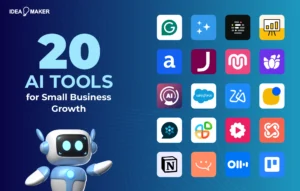
Creating professional visuals for social media and advertising can be a bottleneck. Canva, with its integrated AI features, offers relief. Its Magic Studio or similar tools allow users with no professional design skills to quickly perform complex tasks like background removal, image resizing for various platforms, or generating simple graphics from a text prompt. This capability ensures that a small business can maintain a high-quality visual presence without investing heavily in professional design software or services.
Optimizing Back-Office Tasks with AI Tools for Small Business Owners
Beyond customer-facing roles, AI contributes to efficiency in core operational and financial processes.
Simplifying Financial Tracking and Accounting
Bookkeeping is a necessary but often laborious task. Accounting software like QuickBooks or Xero now uses AI to significantly simplify financial tracking. These systems automatically categorize transactions from linked bank accounts, reconcile expenses against receipts, and flag potential anomalies or errors.
For AI tools for small business owners, the benefit here is accuracy and time savings. The risk of human error in data entry is reduced, and the owner gains a real-time, accurate picture of the business’s financial health without spending hours manually processing paperwork.
AI Tools for Small Business Owners in Basic HR and Recruitment
The hiring process, particularly the initial screening of candidates, consumes vast amounts of time. Simple AI tools can assist in this area. Platforms integrated with recruitment software can automatically scan resumes for specific keywords, skills, and qualifications required for a role. This allows the small business owner to quickly filter a large pool of applicants down to the most relevant candidates, ensuring that the limited time for interviews is spent on people who are genuinely qualified.
Improving Cybersecurity and Fraud Detection
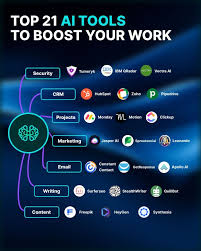
Small businesses are often targets of cyberattacks. While complex security systems are expensive, many standard business software subscriptions now include AI-powered security features. These features continuously monitor network traffic, flag unusual login attempts, and automatically update security protocols to defend against known threats. This protective layer ensures that the business’s sensitive data remains secure without the expense of a dedicated IT security team.
Implementing AI Tools for Small Business Owners: Best Practices
Successful adoption of AI depends less on the technology itself and more on the strategy used to implement it.
Starting Small and Measuring Impact
The most practical approach for AI tools for small business owners is to begin modestly. Identify one or two major pain points—such as slow customer support or time-consuming scheduling—and select one accessible tool to address each. Start with a free trial or the lowest-cost tier.
The key is to measure the impact immediately. If a new chatbot reduces customer service tickets by 30% in the first month, the value is clear. This focused approach prevents resource waste and builds internal confidence in the technology before making a larger investment.
Maintaining the Human Element
The goal of using AI tools for small business owners is to augment, not eliminate, human interaction. AI is excellent at handling volume and routine, but it lacks empathy, complex judgment, and the ability to solve nuanced problems that require creative thinking or deep understanding of human context.
Business owners must ensure that while AI handles the first touchpoints (like answering FAQs), human staff remain available for emotionally charged issues, customer complaints, and personalized sales conversations. The human touch is what often differentiates a small business, and it must be protected.
Scaling Operations with AI Tools for Small Business Owners
As the business grows and reliance on AI increases, the tools will need to adapt. A free or basic plan that worked initially may become restrictive. The final stage of effective implementation involves strategically upgrading the chosen tools, moving from simple, general-purpose platforms to more specialized, professional-grade systems that offer deeper integration and advanced features as the business’s needs become more complex. This measured scaling ensures that AI continues to support, rather than complicate, growth.
Frequently Asked Questions (FAQs)
How much do AI tools for small business owners typically cost?
The cost of AI tools for small business owners is highly flexible. Many essential tools, especially in the areas of writing, project management, and basic CRM, offer permanently free tiers that are sufficient for a single owner or a very small team. Paid subscriptions for specialized tools, like advanced chatbots or high-volume content generators, generally start around $10 to $50 per month. This pricing structure makes AI extremely cost-effective when compared to the salary of even a part-time employee.
Which AI tool is the best starting point for a small business with no AI experience?
The best starting point for AI tools for small business owners with zero experience is often a simple conversational AI (like the free versions of ChatGPT or Gemini) or an automated scheduling tool (like Calendly). The conversational AI can immediately help with drafting emails and generating ideas, while a scheduling tool offers immediate, measurable time savings by automating appointment setting. Both options are easy to implement and show quick value.
Can AI tools for small business owners completely replace a marketing or customer service assistant?
No, AI tools for small business owners cannot completely replace human assistants. AI is an exceptional tool for automation, volume handling, and data processing. It can effectively handle 80% of routine inquiries and content generation. However, human staff are essential for complex problem-solving, maintaining empathy, managing brand strategy, and handling customer complaints. AI should be viewed as a tool that allows the human assistant to spend more time on strategic, high-impact work.
Is the data stored by AI tools for small business owners safe?
Reputable AI tools for small business owners and established SaaS providers prioritize data security. They use industry-standard encryption, comply with regulations like GDPR, and have robust privacy policies. When choosing a tool, the small business owner should always select well-known providers and verify their data security practices to ensure sensitive business and customer information is protected.
How long does it take to see results after implementing AI tools for small business owners?
The time frame to see results depends on the tool’s function. For simple tasks like automated scheduling or chatbot implementation, the time savings are immediate. For AI tools focused on marketing or sales prediction, which require data analysis, it may take 1 to 3 months to gather enough data for the AI to learn and provide significant, measurable improvements in conversion or targeting.