Understanding the Role of AI Tools for Content Creation Beginners
Starting a journey in content creation can feel challenging. A new creator often faces the hurdle of generating regular ideas, drafting content quickly, and designing visuals without specialized skills or a large budget. Fortunately, artificial intelligence has provided a practical way to overcome these initial obstacles. The right selection of AI tools for content creation beginners acts as a powerful support system, simplifying complex tasks and helping new creators produce higher quality output much faster.
Why Beginners Should Start with AI
The primary reasons many aspiring creators pause are time and skill gaps. Drafting a consistent blog, managing social media posts, and learning complex video editing can be overwhelming. AI tools for content creation beginners step in to handle the heavy lifting of repetitive, time-consuming tasks.

These tools are not intended to replace human creativity. Instead, they serve as powerful assistants that can generate a rough draft, offer headline suggestions, or create a simple graphic in seconds. By automating the most difficult parts of getting started—like overcoming a blank page or fixing complex grammar issues—AI allows the beginner to focus on what matters most: developing a unique voice, understanding the audience, and creating strategic content ideas. AI provides a valuable learning aid, offering immediate feedback on structure and clarity that helps accelerate skill development.
Key Features That Define Beginner-Friendly AI
Not all AI software is suitable for a new user. For a tool to qualify as one of the AI tools for content creation beginners, it must possess specific qualities that prioritize ease of use and accessibility.
- Simple, Conversational Interfaces: The most accessible tools use a chat-based interface. If a user can send a text message, they can use the tool effectively. This natural language input removes the need for complex menus or technical commands.
- Free or Low-Cost Entry: Budget is a key factor. The best beginner tools offer functional free tiers or affordable subscriptions (often under $20/month). This allows the creator to experiment and learn without a major financial risk.
- Pre-Built Templates: Tools that offer templates for common content formats (e.g., social media captions, email subject lines, blog outlines) guide the beginner through the process, ensuring consistent and useful output every time.
The Best AI Tools for Content Creation Beginners: Writing Focus
Written content remains the foundation of most online work, and AI provides the most immediate gains in this area.
General-Purpose Text Generators
These tools are versatile and can assist with almost any written task, making them core AI tools for content creation beginners.
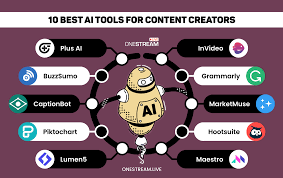
- ChatGPT (Free/Basic Access) or Google Gemini: These conversational AIs are ideal starting points. A user can ask for an outline for a blog post, a list of titles for a YouTube video, or a simple explanation of a complex topic. The chat format makes it an intuitive brainstorming and drafting partner. It is used widely because it handles everything from summarizing long research papers to generating short, creative ad copy.
- Grammarly: This is an essential safety net for any new writer. While its basic functions check spelling and grammar, its AI features extend to suggesting improvements in clarity, tone, and flow. Grammarly helps a beginner ensure their content is polished and professional before publishing, offering immediate, practical editing guidance.
Simple Long-Form Drafting Tools
For creators focused on articles and blog posts, specialized writing assistants offer structure and speed.
Platforms like Rytr or the basic tiers of Copy.ai are designed with templates for specific content types. A beginner can input a title and a few key points, and the tool will generate a full introductory paragraph or expand bullet points into coherent sections. These tools are valuable AI tools for content creation beginners because they break down the daunting task of writing a 2,000-word article into smaller, manageable steps, providing a strong foundation that the human creator can then refine.

Top AI Tools for Content Creation Beginners: Visual and Audio
Creating compelling visuals and audio once required expensive software and dedicated learning time. AI changes this.
Creating Accessible Graphics and Images
Visual content drives engagement, and AI democratizes the design process.
- Canva’s AI Features: Canva is already a go-to platform for non-designers. Its integrated AI features, such as Magic Write or its image editing tools (like background remover), make it one of the most accessible AI tools for content creation beginners. A user can quickly generate a banner, remove an unwanted object from a photo, or instantly resize a graphic for different social media platforms, all within a familiar, easy environment.
- Bing Image Creator / Basic Generative Models: For generating unique, copyright-free images for blog headers or social media, simple text-to-image models are effective. The user describes the image they want (e.g., “a watercolor painting of a cat wearing glasses in a library”), and the AI creates it. This eliminates the need to rely solely on generic stock photos.
Simple AI Tools for Video and Audio Production
Video and podcasting can be complex, but AI addresses several bottlenecks.
- Subtitling Tools (e.g., Descript or YouTube’s Auto-Caption): Transcription and subtitling are tedious. Tools that automatically transcribe audio and synchronize captions save new video creators significant time and ensure accessibility. Descript, for example, allows users to edit video simply by editing the text transcript.
- Basic AI Voiceover/Text-to-Speech: For explainer videos or faceless content, simple text-to-speech tools can generate clear, professional voiceovers. These tools provide a cost-effective alternative to hiring a voice actor or buying expensive recording equipment, making video content creation much easier for AI tools for content creation beginners.
Practical Implementation Guide for AI Tools for Content Creation Beginners
A successful start with AI depends not just on the tools chosen, but on how the creator uses them.
Mastering the Art of Simple Prompting
The output from any AI tool is only as good as the input it receives. A core skill for AI tools for content creation beginners to learn is writing clear, specific instructions, known as prompting.
Instead of a vague command like, “Write about coffee,” a better prompt is, “Write a cheerful and concise social media post for Instagram about the best way to brew coffee at home using a French press. Include relevant hashtags.” Specificity ensures the AI knows the goal (cheerful post), the format (Instagram caption), the topic (French press), and the key requirements (hashtags). This focus on detail dramatically improves the quality and usefulness of the output.
The Necessity of Editing and Fact-Checking
It is essential for AI tools for content creation beginners to understand that AI provides a draft, not a final product. The human creator must always take the final, critical steps:
- Accuracy Check: Always verify facts, statistics, and any quotes, as AI models can occasionally generate inaccurate information.
- Voice and Tone: Refine the content to ensure it matches the creator’s unique voice and personality, injecting the emotion and insight that AI often lacks.
- Flow and Context: Edit the draft for logical flow and ensure it serves the overall purpose of the content strategy.
Using the AI output as a robust starting point, not the end result, is the most crucial habit to develop.
Avoiding Over-Reliance on AI
While AI offers speed, beginners must be careful not to let it hinder the development of core creative skills. The ability to generate original ideas, perform independent critical thinking, and write complex narratives remains fundamentally human. AI tools for content creation beginners should be used to automate the manual work (drafting, editing, resizing) so the creator can spend more time on strategic planning, deeper research, and refining their unique perspective. Technology should be a multiplier of human skill, not a substitute for it.
The Future of Content: Growing Skills with AI Tools for Content Creation Beginners
The journey from a beginner to an expert content creator is accelerated by leveraging technology. By starting with simple, affordable AI tools for content creation beginners, a creator builds fluency in this powerful technology. As skills grow, the user can transition from free conversational tools to more specialized, paid platforms designed for deep SEO optimization, large-scale video production, or complex data analysis. This foundational knowledge ensures the creator stays current and maximizes their efficiency, making their content journey simpler, faster, and more effective in the long term.
Frequently Asked Questions (FAQs)
How much does it cost to start using AI tools for content creation beginners?
Starting with AI tools for content creation beginners is often completely free. Many core tools like ChatGPT (basic version), Google Gemini, Grammarly, and Canva all offer free, highly functional tiers that are sufficient for a new creator. For those who need higher usage limits or specialized features (like SEO analysis or unlimited image generation), paid subscriptions generally begin around $10 to $20 per month, making the barrier to entry very low compared to traditional software costs.
Which AI tool is the best AI tool for content creation beginners focused only on social media?
The best AI tool for content creation beginners focusing only on social media is often Copy.ai (or similar short-form copywriting platforms) or the conversational AI models like ChatGPT. These tools excel at generating short, punchy, and diverse captions, headlines, and ideas based on a simple input. They often have pre-built templates specifically for platforms like Instagram, Twitter, and TikTok, making the content creation process direct and very fast.
Do I need to tell my audience I used AI tools for content creation beginners?
While regulations regarding AI disclosure are still developing, being transparent is generally recommended, especially when AI is used to draft significant portions of the content. For AI tools for content creation beginners, the best practice is to always acknowledge that you use AI as a drafting assistant. This builds trust with the audience and differentiates your final work (which includes human editing and insight) from purely machine-generated output.
Will using AI tools for content creation beginners hurt my chances of developing my own writing or design skills?
When used correctly, the answer is no. Using AI tools for content creation beginners can actually accelerate skill development. For instance, AI provides instant feedback on how to structure an argument or simplify complex language, which helps the beginner learn clarity faster than through traditional trial and error. By handling the monotonous parts of content creation, AI frees up the creator to focus on developing higher-level, strategic skills like audience research and unique storytelling.
What is the easiest way for AI tools for content creation beginners to generate ideas?
The easiest way for AI tools for content creation beginners to generate ideas is to use a conversational AI (like ChatGPT or Gemini) as a brainstorming partner. Instead of staring at a blank page, simply ask the AI to “List 15 compelling blog post titles about X subject” or “Generate 10 different angles for a video on Y product.” This rapid generation of initial concepts immediately overcomes creative block, providing a selection of starting points to build upon.